
 Analysis by Gamescozy
The first few rounds of Vita Mahjong are easy to settle into: scan the layered tiles, find a matching pair, and clear a path through the board. What kept me interested beyond that simple loop is how naturally it fits into short breaks. I can play a puzzle while waiting for coffee without needing to remember a story or coordinate with other players. The trade-off is just as clear: this is a calm, focused tile-matching game, not a deep strategy game or a social board-game night in your pocket.
Why the first sessions feel inviting
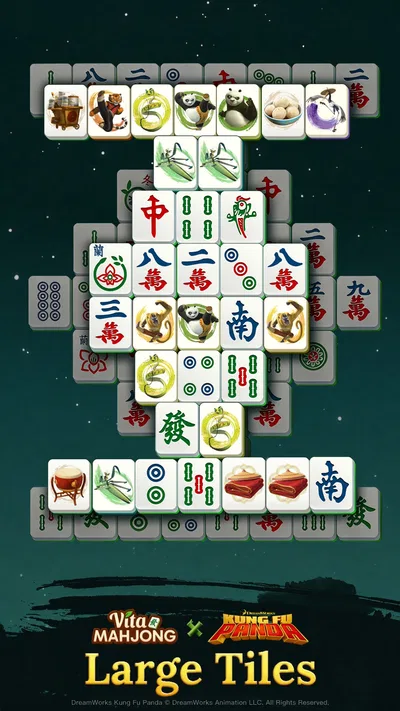
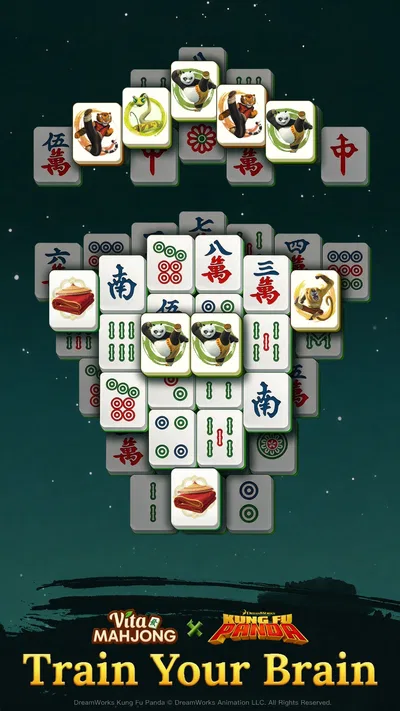
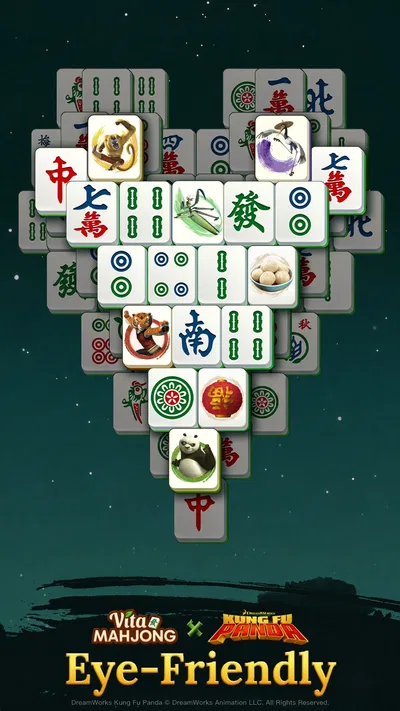
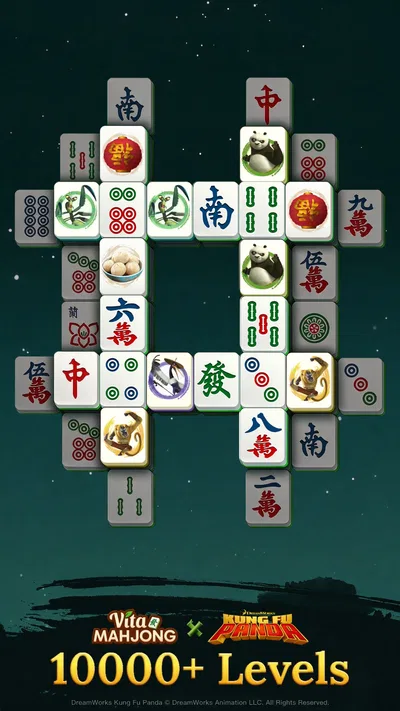
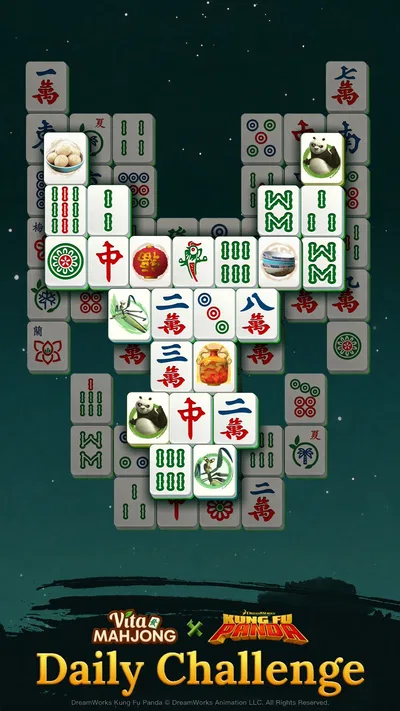
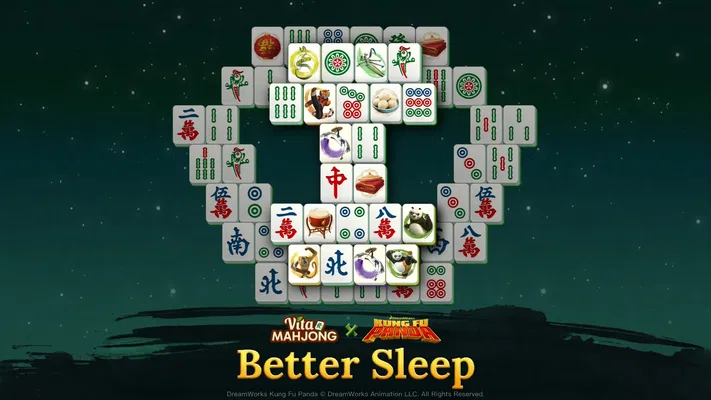
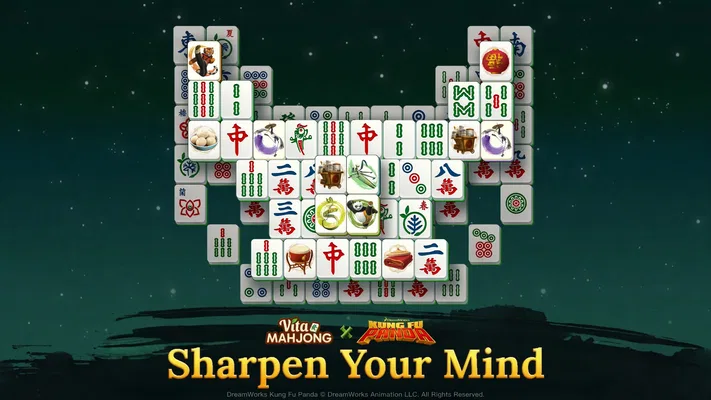
Vita Studio’s board game is built around the familiar solitaire form of mahjong: remove matching tiles that are available to select, then work through the arrangement until the board is clear. It is a solo puzzle, rather than a traditional mahjong match with opponents. That distinction matters if you are choosing between this and a game centered on multiplayer competition or learning the full rules of mahjong.
The Kung Fu Panda theme gives the presentation a recognizable identity, while the core task remains easy to understand. I don’t need a long tutorial to grasp the aim, and the visual theme doesn’t change the basic appeal of reading the board. This makes it approachable for someone who has never played a tile-matching puzzle, as well as for a returning player who wants something immediately familiar.
In the first week, the strongest draw is convenience. A round can serve as a small pause between errands, a low-pressure activity before bed, or a way to occupy a few minutes when I don’t want to start a more demanding game. The store summary describes it as playable offline, which suits that use case: it is intended for puzzle sessions that don’t depend on an ongoing connection.
The game is free to download and rated for Everyone, so it is easy to try without making a purchase first. It has an average rating of 4.9 from around 6.5 million ratings, with about 73,000 written reviews and over 100 million installs. Those figures suggest a very broad audience, though popularity alone cannot tell you whether the pace and repetition will suit your own habits.
A useful way to approach each board
My practical tip is to avoid taking the first available match automatically. Before tapping, scan the exposed tiles and consider which pair opens the most useful part of the layout. A match can look harmless while removing a tile that was supporting your options; a brief pause to compare the visible choices helps make the puzzle feel more deliberate.
It also helps to treat a board as a sequence of decisions rather than a race. If I am tired or distracted, I’m more likely to clear whatever is obvious and later discover that the remaining arrangement is awkward. When I give the layout a quick top-to-bottom scan first, I make fewer impulsive moves. That small habit adds more value than trying to play quickly.
What remains rewarding after the novelty
After the theme has become familiar, the lasting appeal depends on whether you enjoy the act of sorting visual information. The satisfaction comes from spotting pairs, opening space, and watching a crowded board become manageable. That is a quieter reward than winning against another person, and it can be exactly right when I want a game that asks for attention without demanding a long commitment.
Compared with word puzzles, this asks less of vocabulary and more of visual scanning. Compared with match-three games, it feels less animated and less driven by cascading effects; the focus is on the arrangement already in front of you. And compared with a physical board game, it removes setup and cleanup, but also loses the tactile feel and shared table conversation. Which alternative is better depends on whether you want solitude and convenience or variety and interaction.
The game is currently at version 3.44.0, and its release date was January 9, 2024. I would consider those details useful context, not a guarantee of any particular update schedule or long-term feature plan. For a player, the more important question is whether the central puzzle stays pleasant once the novelty of the theme wears off.
Keeping it in rotation without making it a chore
For a lasting routine, I would use it as a small, optional daily reset rather than setting a rigid target. A few boards during a commute wait or a quiet moment at home can make the game feel like a helpful break. If I start treating every session as something I must complete, the same repeated activity can quickly become an obligation instead of relaxation.
One useful workflow is to stop after a satisfying round rather than continuing simply because the game is open. That keeps the experience associated with a short mental pause. If a board becomes frustrating, stepping away is more sensible than tapping through in irritation; when I return, I can look at the tile layout with fresher attention. This is particularly helpful for a puzzle whose pleasure comes from noticing options rather than reacting quickly.
Offline play is a meaningful convenience for someone who wants a game available during travel or in places with unreliable reception. It also makes the basic activity less dependent on being connected at the exact moment a break appears. I would still think of it as a compact solo pastime, not a replacement for games that provide evolving narratives, varied modes, or a changing group of opponents.
What can wear thin, and what upkeep asks of you
The main source of fatigue is the core loop itself. Matching and clearing tiles is the point, so players who need a new mechanic every few sessions may find the experience repetitive. The Kung Fu Panda presentation can make the first encounters more charming, but a theme cannot fully change the nature of repeated board-solving. If you already tire of solitaire-style puzzles, this is unlikely to become a lasting exception.
There is also a difference between a relaxing pace and a puzzle that feels too familiar. Some days I want a low-stakes activity, and this format fits. On other days, I would rather play a competitive board game or a puzzle with more varied problem-solving. I would not recommend choosing it as your main game if you need a strong sense of progression, story, or social connection to stay engaged.
There is little practical maintenance involved in the habit of playing: open the game, focus on a board, and stop when you have had enough. The more relevant upkeep question is whether you are comfortable with optional spending. In-app purchases range from $0.99 to $49.99 per item. Since the game is free to start, I’d recommend trying the basic experience first and deciding whether any purchase would genuinely improve your own use, rather than buying simply because a prompt appears.
That range also means it is worth being deliberate if you share a device or let a child play. The Everyone age rating indicates broad content suitability, but it does not remove the need for an adult to manage spending settings where appropriate. I would treat the purchase options as a reason to check your own device controls, not as a reason to assume that every session requires spending.
Who is likely to keep coming back
I’d recommend Vita Mahjong to people who like calm visual puzzles, want a solo game that can be picked up briefly, or value being able to play offline. It can also work well for someone new to tile-matching because the goal is immediately understandable. The strongest fit is a player who enjoys slowly scanning a layout and making careful choices, rather than someone looking for speed or head-to-head competition.
I’d point a player seeking richer strategic interaction toward a traditional multiplayer board game instead. If you want constant novelty, a narrative campaign, or a distinct challenge in every short session, a different puzzle genre may hold your attention longer. The game’s simplicity is both its convenience and its limit: it avoids demanding setup, but it does not turn into a broad collection of activities.
My long-term verdict
For me, the case for keeping it installed is practical rather than dramatic. Vita Mahjong earns space if I want a dependable, low-pressure tile puzzle for spare moments, especially when offline access matters. It is easy to return to because the central task is clear, and the game does not ask me to arrange a group or follow a complicated set of rules.
Its lasting value depends on enjoying that same task repeatedly. The theme and the first-week ease help draw me in, but they are not a substitute for variety. I would keep it in rotation as a small break-time game, while accepting that it may sit untouched when I want competition, a deeper challenge, or a different kind of mental engagement.
Overall, this is a sensible free choice for fans of solo tile-matching puzzles, with optional purchases to keep in mind. I would try it without expecting a constantly changing experience: if the simple rhythm of spotting pairs and opening the board continues to feel relaxing, it can justify a lasting place on your device; if that rhythm starts to feel like repetition, moving on is no loss.